Blog

News, updates, and behind-the-scenes insights from UB DSP.

October 7, 2026

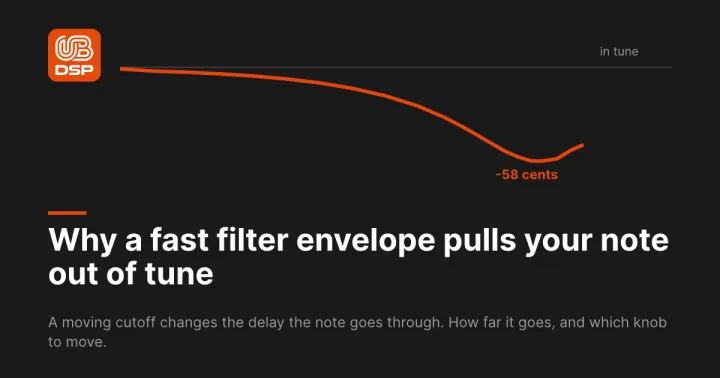
Why a Fast Filter Envelope Pulls Your Note Out of Tune

A short filter envelope on a bass note and the note goes flat for a moment. Your synth is not drifting: a moving cutoff changes the delay the note goes through, and a changing delay is a pitch shift. How far it goes by register, slope and speed, and the fixes that do not just move the problem.

Read article →

September 16, 2026

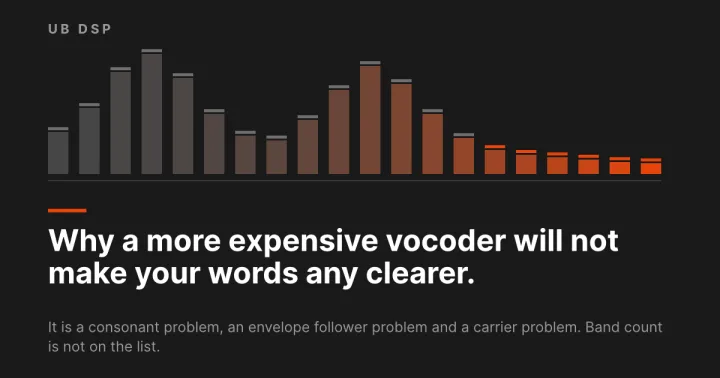
Why a More Expensive Vocoder Will Not Make Your Words Any Clearer

Vocoder intelligibility is not a band count problem. Consonants do not survive being measured in bands, a slow release is a lowpass sitting on the modulation rates that carry speech, and a carrier with holes leaves bands silent. The three real levers, in order, and the one trick that works on any vocoder ever made.

Read article →

September 9, 2026

How to Change the Vowels in a Vocal

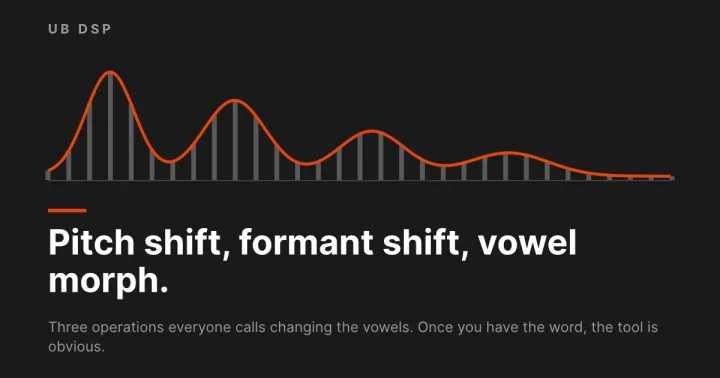
Pitch shift moves the note. Formant shift moves the apparent size of the singer. Vowel morph moves the vowel itself. Three operations everyone calls the same thing, what each one can and cannot do, and why EQ is the right tool for a small move once you use it as two moves instead of one.

Read article →

September 2, 2026

How to Make a Synth Sound Like a Voice

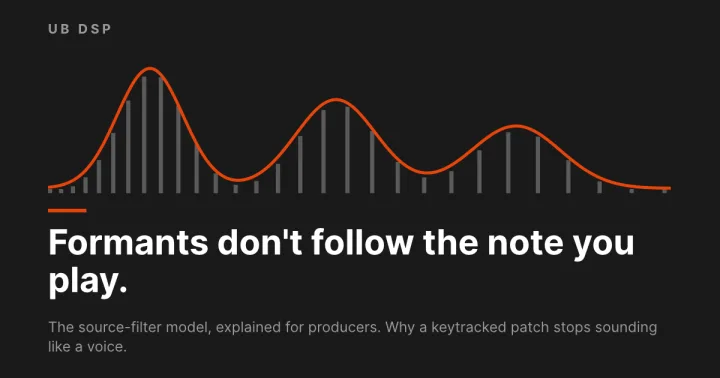
Formants do not follow the note you play. That one fact is the difference between a synth that sounds like a voice and a keytracked resonant lead, which are both worth making. The source-filter model explained for producers, with the formant tables and five things that make a patch speak.

Read article →

May 26, 2026

Introducing Vowel Blender

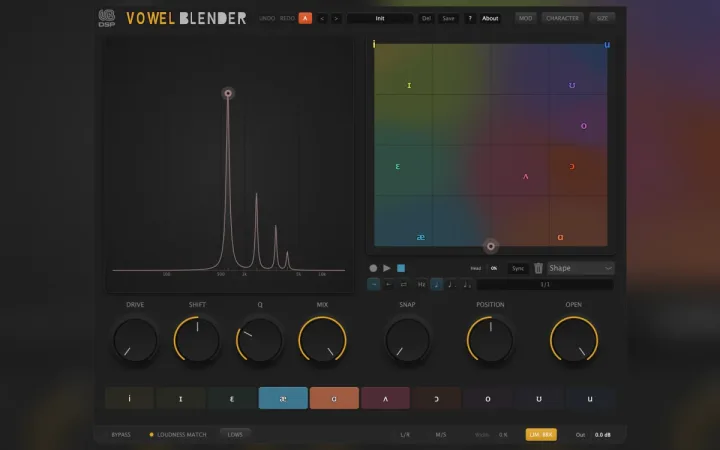
Vowel Blender is a formant filter plugin built around a 2D phonetic pad on the IPA vowel chart. Seven voice models from Peterson & Barney and Hillenbrand research, ten vowels with four formants each, a motion recorder that loops in tempo, and nine modulators you can route anywhere.

Read article →

February 14, 2026

Introducing Grit Blender

After months of development, testing, and meticulous tuning, Grit Blender is here. Twelve saturation types, three blend modes, dual-stage processing, and a design philosophy that puts the musician first. Here is the story behind our debut plugin and what makes it different.

Read article →